
How to Find Buyer Intent Keywords (and Turn Them Into Leads)
If you want to find people who are ready to buy, you need to be listening for what they're saying — and that starts with the right buyer intent keywords.
In this section, we'll cover:
Whether you're new to keyword alerts or refining your existing setup, by the end you'll know exactly how to build a list of buyer keywords that delivers leads, not noise.
- 01 What buyer intent keywords are Learn the fundamentals of buyer intent keywords and how they differ from generic search terms
- 02 Examples of buyer keywords See real examples of high-intent keywords across different industries and business types
- 03 How social listening tools can surface live opportunities Discover why social listening gives you a competitive advantage over traditional search marketing
- 04 How to build your own list of buyer keywords Step-by-step process to create a targeted keyword list that attracts qualified prospects
- 05 Refining keywords over time Learn how to optimize your keyword list based on performance and changing market conditions
- 06 How to turn alerts into conversations and sales Master the art of converting keyword alerts into meaningful business relationships
- 07 How social listening tools work Understand how social listening tools monitor platforms and help you find opportunities
- 08 Exact vs Match All When to choose strict phrase matching vs flexible all-words matching
What Are Buyer Intent Keywords?
Buyer intent keywords (also called buying intent keywords or purchase intent keywords) are search terms and phrases that signal someone is actively looking for a solution — right now.
These are different from broad, informational terms.
Example:
(Too broad — could be tutorials, trends, or DIY advice.)
(Signals they're ready to hire.)
When you focus on buyer keywords like this, you're filtering for people who are already in a purchasing mindset.
Examples of Buyer Keywords
Here's a list of buyer keywords broken down by intent type:
High intent service searches:
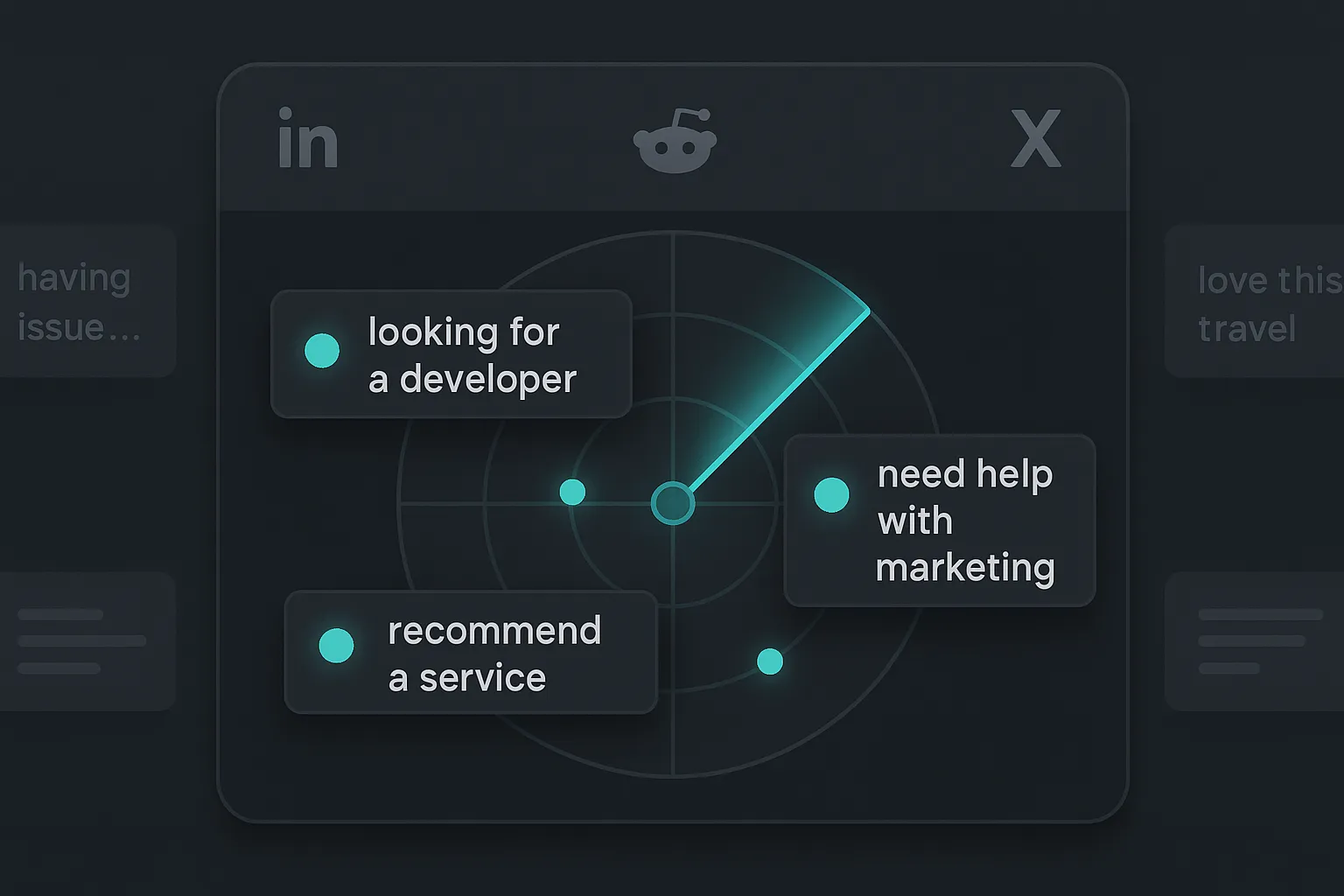
- "looking for a developer"
- "need help with marketing"
- "recommend a [service]"
E-commerce / product searches:
- "best price for [product]"
- "buy [product] online"
- "where to get [product]"
B2B / SaaS searches:
- "need CRM software"
- "recommend a project management tool"
- "looking for a SaaS to [do X]"
Why Social Listening Is the Missing Piece
Most people think of buyer intent keywords only in the context of Google Search or PPC campaigns. That's useful — but it's not the full picture.
Social listening is different:
- Instead of waiting for someone to search Google, you monitor social platforms, forums, and communities for people already talking about their needs.
- These posts aren't just search queries — they're live, public conversations you can join.
Example – Someone posts on LinkedIn:
Looking for a website designer to help with my SaaS project — any recommendations?
Google:
You'll never see this.
Social Listening:
You get an email alert and you can reply directly.
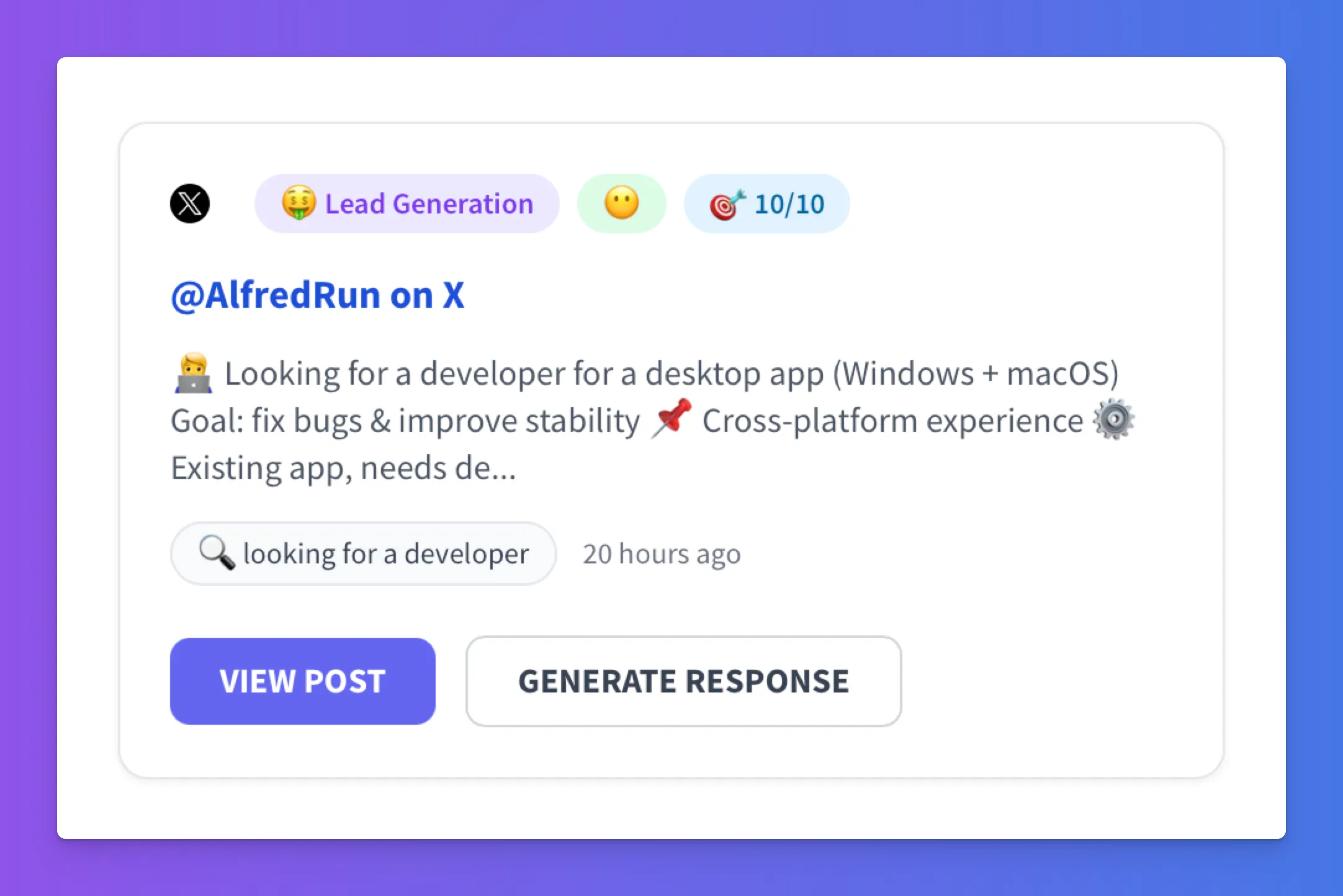
Social listening alert via Alertly
How to Build Your Own List of Buyer Keywords
Think like your audience
What would they type when asking for help?
Use short phrases (2–4 words)
Too long and you'll miss results; too short and you'll get noise.
Avoid jargon your customers wouldn't use
If you're not sure, ask your customers.
Exact vs Match All
Matching mode controls how your keywords trigger alerts. Use the right mode to balance quality and volume.
Exact match
- Finds posts containing the exact phrase.
- Lowest noise; may miss rephrases or extra words in between.
- Best for short, specific phrases.
Match all words
- Finds posts containing all your words, in any order.
- Higher reach; can introduce more noise.
- Great once you trust the keyword theme and want more volume.
Refining Keywords Over Time
Even the best starting list needs tuning.
Keep
Keep keywords that regularly surface useful leads.
Replace
Replace keywords that return irrelevant posts or nothing at all.
Expand
Switch from exact match to "all words" when you want more reach.
From Keywords to Sales: The Final Step
Finding buyer intent keywords is just step one.
Once you get an alert:
Read the post carefully
Understand their need.
Respond quickly
Ideally within hours of posting.
Personalize your reply
Reference something specific they said.
Ask for the sale
Move the conversation to DM, email, or a call.
Buyer Intent Keywords: FAQs
What are buyer intent keywords?
How do I build a list of buyer keywords?
Where do I find leads using these keywords?
What is the difference between buyer keywords and lead generation keywords?
Ready to Find Leads Before Your Competitors?
Start with your first 2–3 buyer intent keywords